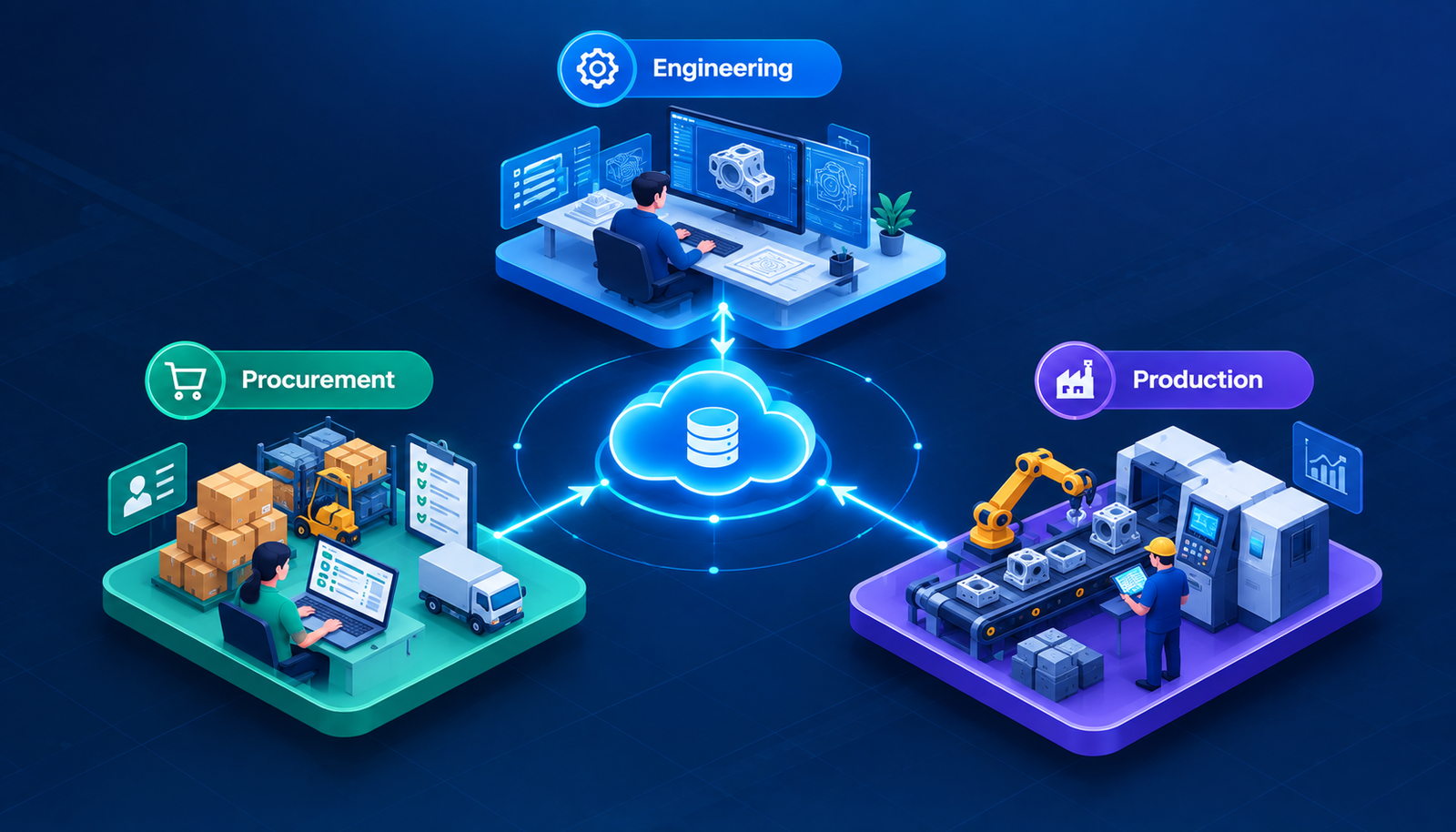
In today’s hyper-connected digital economy, supply chains don’t just move goods — they move data. Behind every order, invoice, tracking update, and inventory status lies an intricate web of APIs (Application Programming Interfaces). These APIs connect systems, partners, platforms, and customers, enabling seamless collaboration and real-time visibility. But with connectivity comes risk. As supply chains expand and integrate with new partners, the attack surface grows — and so does the potential for security breaches.
That’s where security testing automation steps in. It’s no longer enough to manually test APIs or rely on periodic reviews. Modern supply chain APIs demand continuous, automated defenses — catching vulnerabilities before attackers do.
In this blog, we’ll explore why security testing automation matters for supply chain APIs, how it works, the key tools and techniques, and best practices to implement it effectively.
Why Security Testing Automation Matters in Supply Chain APIs
1. Supply Chains Are Only as Strong as Their Weakest Link
Supply chains are increasingly distributed. A manufacturer’s inventory API might call a logistics partner’s tracking API, which in turn connects to a retailer’s order management system. One insecure API can compromise the entire ecosystem.
Hackers target supply chain APIs because a single breach can ripple across multiple organizations — sometimes with devastating consequences.
Automation helps ensure consistent security checks across all APIs, every time they are updated or deployed.
2. Manual Security Testing Is Too Slow and Error-Prone
Manual penetration testing and code reviews are essential, but they’re not sufficient on their own:
- They take time.
- They require expert specialists.
- They can miss hidden or newly introduced vulnerabilities.
In contrast, automation allows security checks to run continuously, catching flaws early in the development lifecycle — before they’re exploited in production.
3. Frequency of Changes Demands Continuous Testing
APIs evolve constantly. New features, partners, endpoints, and integrations are added regularly. Each change can introduce new vulnerabilities.
Automated security tests can be integrated into CI/CD pipelines, ensuring that every code change or configuration update is vetted for security issues.
What Is Security Testing Automation?
At its core, security testing automation is the practice of using tools, scripts, and frameworks to automatically evaluate APIs for security vulnerabilities. It includes:
- Static analysis
- Dynamic testing
- Fuzzing
- Dependency scanning
- Authentication and authorization testing
- Compliance checks
Automation tools can simulate attacks, validate access controls, analyze code paths, and alert teams when risks are found.
How Automated Security Testing Works in Practice
1. Integrating into the CI/CD Pipeline
To catch vulnerabilities early, testing must be part of the development workflow.
Here’s how automation typically fits in:
- Commit Stage: Developers push APIs to a source repository (e.g., GitHub, GitLab).
- Build Stage: Automated security scanners run static analysis on code.
- Test Stage: Dynamic tests against deployed API instances validate behavior and responses.
- Deploy Stage: Final security checks before promoting to production.
This approach ensures that security isn’t an afterthought — it’s baked into every release.
2. Types of Automated Security Tests
Static Application Security Testing (SAST)
SAST tools analyze source code to find vulnerabilities before the API is even deployed. They spot issues like:
- Hard-coded credentials
- Unsafe function calls
- Insecure configurations
These tests are fast and help developers fix code early.
Dynamic Application Security Testing (DAST)
DAST tools interact with running APIs — simulating real-world attacks. They send crafted requests and inspect responses to identify:
- SQL injection
- Cross-site scripting (XSS)
- Improper access control
Unlike SAST, DAST tests don’t need source code — only a deployed instance.
API Contract Testing
Supply chain APIs often communicate via defined contracts (e.g., OpenAPI/Swagger). Contract tests validate:
- Required parameters
- Expected response formats
- Authentication policies
Automated testing will flag mismatches between contract definitions and actual behaviors — which can be exploited by attackers.
Fuzz Testing
Fuzzers send large volumes of random or semi-random inputs to APIs to find unexpected crashes or handling bugs. It’s particularly helpful for discovering edge cases that traditional tests miss.
Dependency Scanning
Modern APIs rely on libraries and packages. Dependency scanners automatically detect known vulnerabilities in third-party components and alert teams to patch or mitigate risks.
Top Tools for Automating Security Testing in APIs
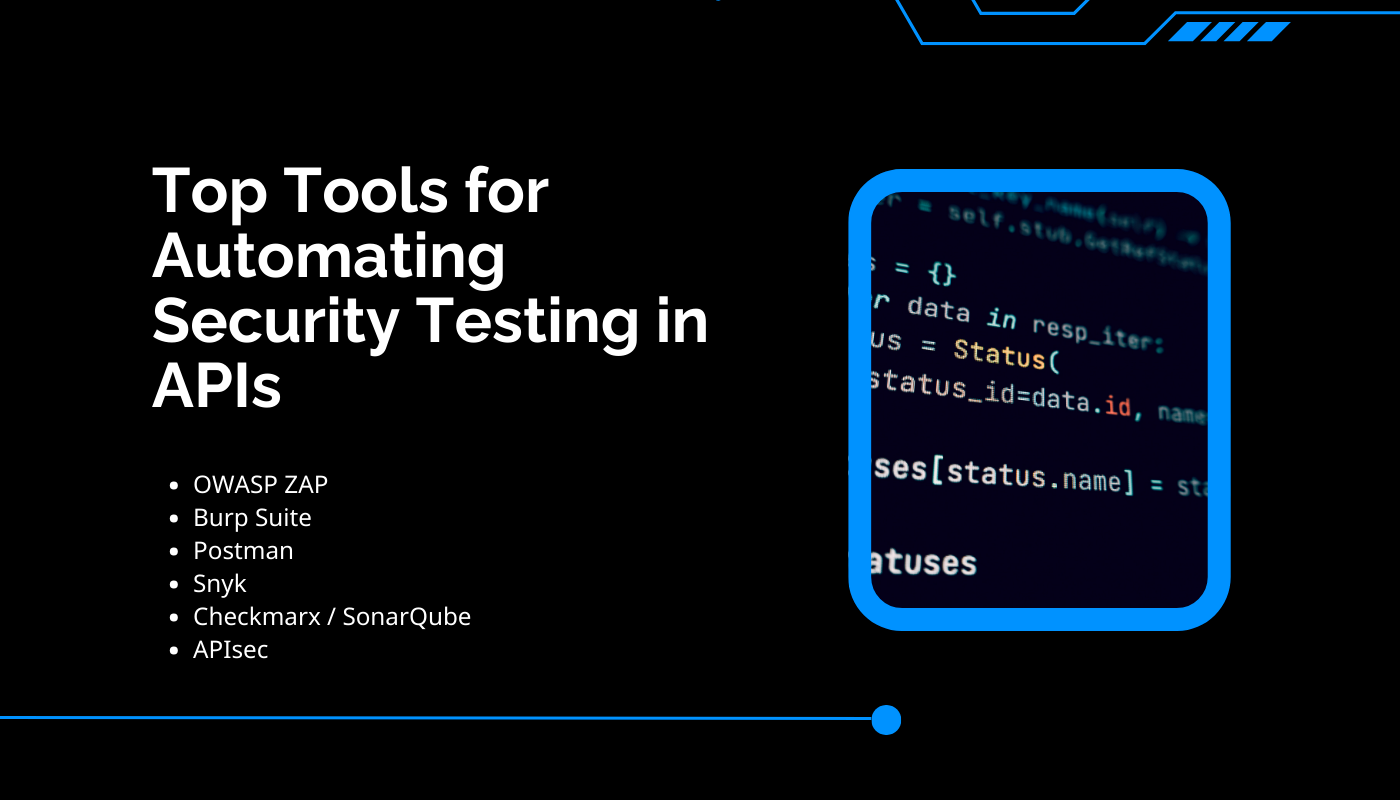
Here’s a sampling of mature tools used for API security automation:
- OWASP ZAP – Open-source dynamic scanner
- Burp Suite – Popular proxy and fuzzing tool
- Postman – Can automate contract and functional security testing
- Snyk – Dependency vulnerability scanning
- Checkmarx / SonarQube – Static code analysis
- APIsec – Automated API penetration testing platform
Choosing the right combo depends on your stack, team expertise, and risk profile.
Best Practices for Security Testing Automation
1. Shift Left — Test Early, Test Often
Security shouldn’t wait until production. Embed automated testing into development workflows so that vulnerabilities are caught during coding and testing phases.
2. Treat Security Bugs Like Functional Bugs
Set rules so that any security failure blocks builds or deployments — just like a failed unit test. This reinforces accountability and urgency.
3. Test Against Realistic Environments
Automated tests should run against realistic API environments that mimic production behavior — including authentication schemes, rate limits, and integrations.
4. Monitor and Alert
Automated scanning should generate alerts and dashboards. Integrate with team communication channels (Slack, Teams) and ticketing systems (Jira) to ensure rapid response.
5. Stay Updated with Threat Intelligence
Threats evolve. Automated tools should pull the latest vulnerability feeds, OWASP Top 10 guidance, and CVE databases to ensure emerging threats are accounted for.
6. Balance Coverage with Speed
Tests need to be thorough but efficient. Too many heavyweight checks can slow down pipelines; too few can miss risks. Prioritize high-risk areas first — like authentication flows and data-sensitive endpoints.
The Business Impact of Automated Security Testing
Security isn’t just a tech concern — it’s a business imperative.
Here’s what automation brings to the table:
- Reduced Risk: Fewer vulnerabilities mean lower chances of breaches and associated costs.
- Faster Time to Market: Automated checks accelerate releases by catching issues earlier.
- Greater Trust: Partners and customers trust APIs that are continuously tested and proven secure.
- Compliance Readiness: Automated reporting supports audits and regulatory compliance efforts.
In supply chain contexts, reputation and uptime are everything. A secure API ecosystem drives operational resilience and competitive advantage.
Conclusion: Automation Isn’t Optional — It’s Essential
Supply chain APIs are the connective tissue of modern business. Their security — or lack thereof — can determine whether a company thrives or suffers a catastrophic breach.
Manual security testing has its place, but automation is the only scalable way to protect APIs in fast-moving, complex supply chains. By integrating automated security checks into development pipelines, embracing continuous testing practices, and using powerful tools, organizations can stay one step ahead of attackers — while keeping partners and customers confident in the safety of their digital operations.
Security testing automation isn’t just a technology investment — it’s a strategic advantage.