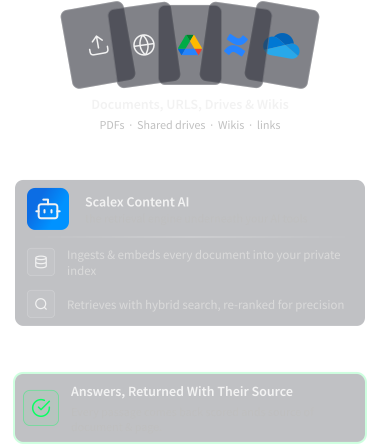
Answers arrive in seconds instead of digging through folders and wikis.
Grounding every response in your real documents keeps AI assistants honest.
New hires get instant, sourced answers instead of waiting on teammates.
Every result is traceable, so search becomes something teams rely on.
Scattered files and drives become one searchable, current source of truth.
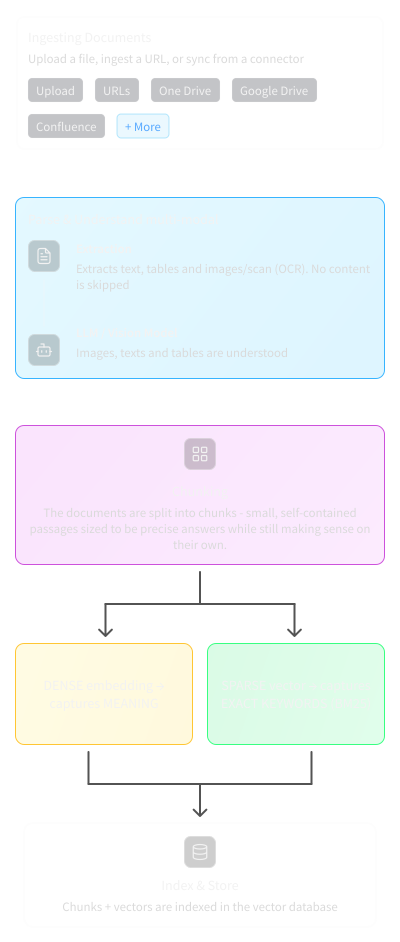
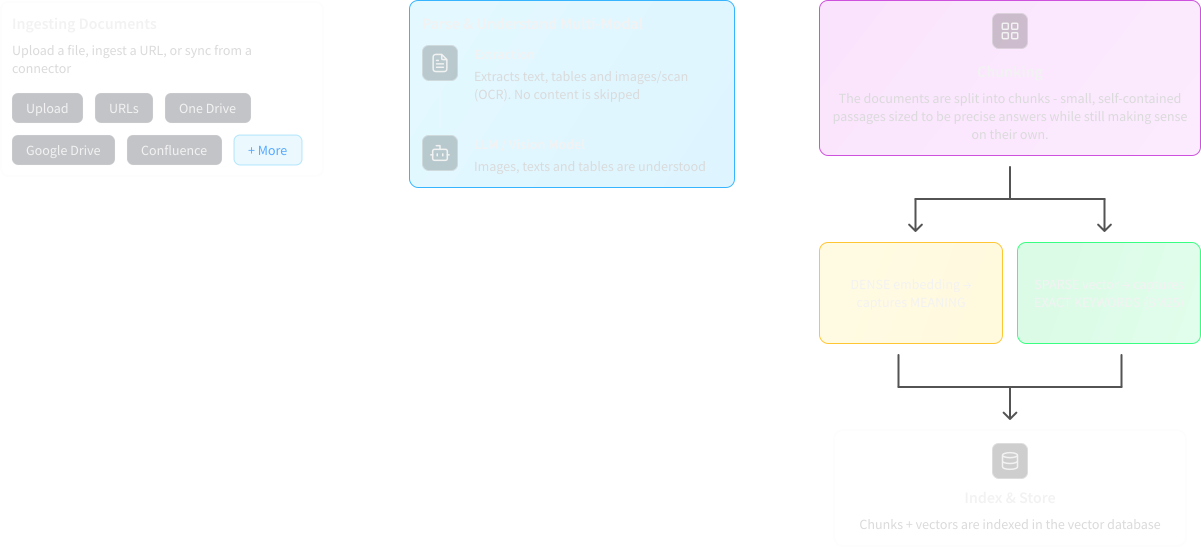
Reads text, tables, and images (with OCR), so no content type is left behind.
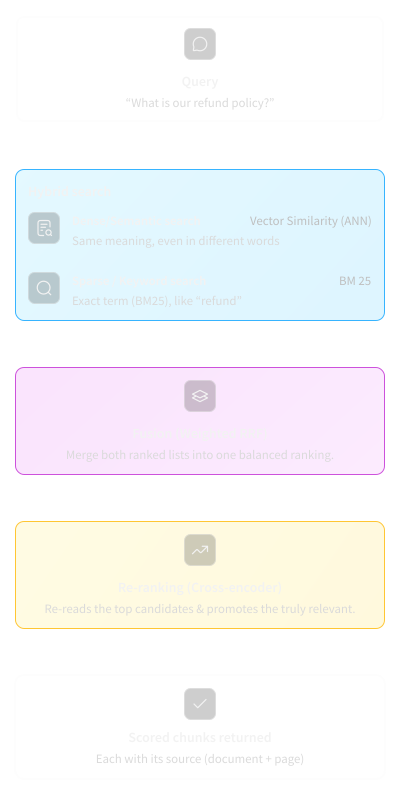
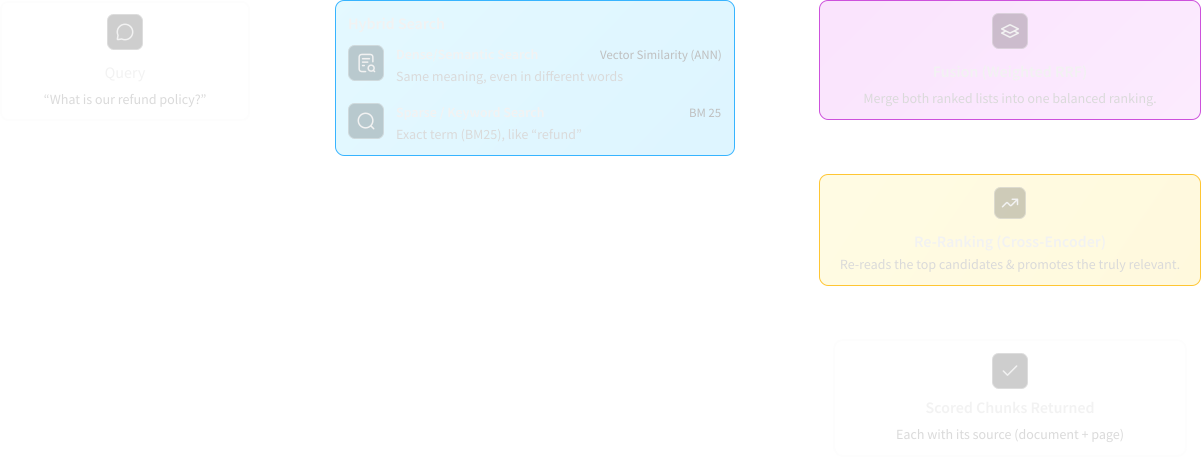
A cross-encoder takes a second-opinion pass over the top candidates and re-orders them for precision.
Your knowledge lives in its own partition; one account can never retrieve another's content.
Semantic and keyword search run together, so results hold up whether the wording matches or not.
Connected sources re-sync on their own, roughly every four hours — new files added, edits refreshed, deletions cleared. A manual "sync now" is available any time.
Every result returns with its document and page, so answers are always traceable.
Building AI features who'd rather not build and maintain a retrieval pipeline from scratch.
Who need answers that are current and traceable, not guesses.
Sitting on large, constantly changing document bases.
Who need every answer tied back to a source.
Weeks 1
Connect your sources — upload files, add links, or set up a Drive / OneDrive / Confluence connector — and run the first ingestion.
Weeks 2 - 3
Test retrieval against real questions and refine until the results are consistently on point.
Weeks 4
Connect Scalex Context AI to your chat or workflow tools and move into production, with connectors keeping everything fresh.
Files (PDF, Word, PowerPoint and more), links, and connected sources. It's multi-modal — text, tables, and images/scans (via OCR) are all read and made retrievable.
No. Ingestion, indexing, hybrid search, and re-ranking are all handled — you connect your sources and query the engine.
Connected sources re-sync on their own, roughly every four hours: new files are added, edits are refreshed, and deletions are cleared. You can also trigger a "sync now" at any time.
Hybrid search handles it. Semantic search catches the same meaning in different words, while keyword search nails exact terms and names — the two run together.
Every result is a scored passage returned with its source — the document and the page — so any answer can be traced back to a real place in a real document.